
InciSioN Global / ECO learning
From first response to first-contact care.
CFAR and BEC address different but connected points in the emergency-care system. Learn where each belongs, who it is intended for and why training needs functioning referral and clinical systems.
01 / Two complementary approaches
Respond early. Assess systematically. Connect to care.
Community First Aid Response (CFAR)
For designated non-specialist responders linked or being linked to formal care. Focuses on scene safety, danger recognition, appropriate simple actions, communication and handover.
Basic Emergency Care (BEC)
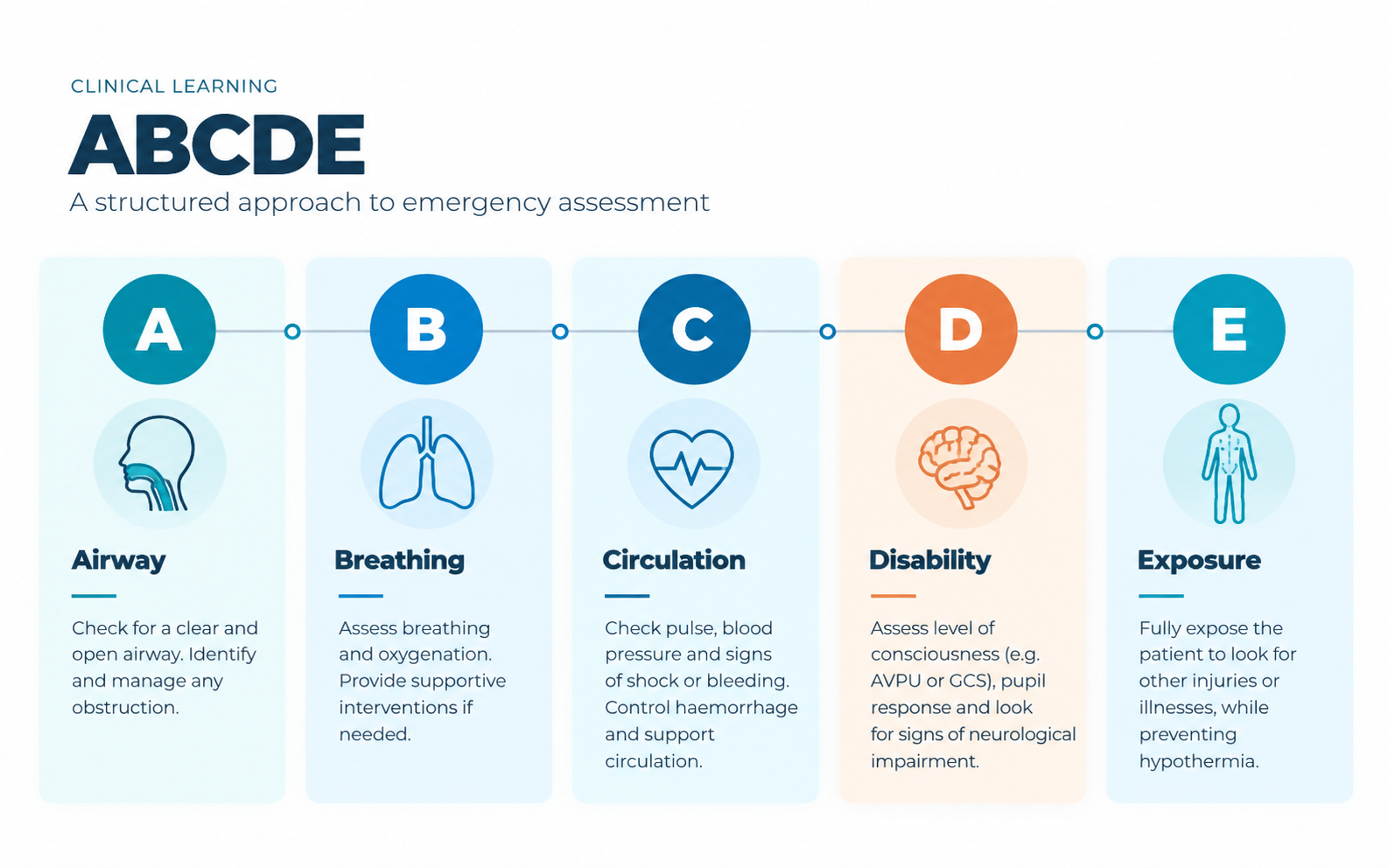
For healthcare workers at first contact with acutely ill and injured patients. Builds systematic assessment and initial management through an ABCDE framework.
Not interchangeable: CFAR is not authorization for lay responders to provide advanced clinical treatment; BEC is not a substitute for supervised professional education or national licensure.
02 / Community-linked care
CFAR: strengthen the first link
Early recognition matters where transport is delayed or the first person on scene is not a clinician. An organized response must be tied to locally appropriate communication routes, transport, clinical oversight and the receiving facility.
The intended sequence is: recognize → act safely within scope → activate help → transfer information → hand over.
CFAR is more than a workshop
Learning needs to be sustained through a formal role, appropriate supervision, activation and referral, refresher opportunities and community trust.
What to evaluate: retention, safe recognition, appropriate handover, access across underserved populations and functioning referral pathways.
03 / First-contact professionals
BEC: a shared approach to emergency assessment
WHO, ICRC and IFEM developed Basic Emergency Care to support first-contact health workers treating acute illness and injury. Its case-based learning and skills practice emphasize structured assessment, initial management and team communication.
Implementation, instructor authorization and certification depend on responsible bodies and national arrangements.
04 / Health systems
Training only works when the system works.
Workforce & supervision
Competent staff need support, practice opportunities, team clarity and appropriate supervision.
Readiness & resources
Oxygen, supplies, equipment, blood and referral capacity enable effective clinical action.
Measurement & feedback
Assessment should consider access, time, safety, equity, referral quality and outcomes—not just attendance.
05 / Evidence and learning
Selected examples and authoritative resources
GHANA / EMERGING INITIATIVE
What might this mean in Ghana?
InciSioN Global and InciSioN Ghana are exploring locally informed, simulation-supported approaches to sustainable emergency-care learning. This remains an emerging initiative.